
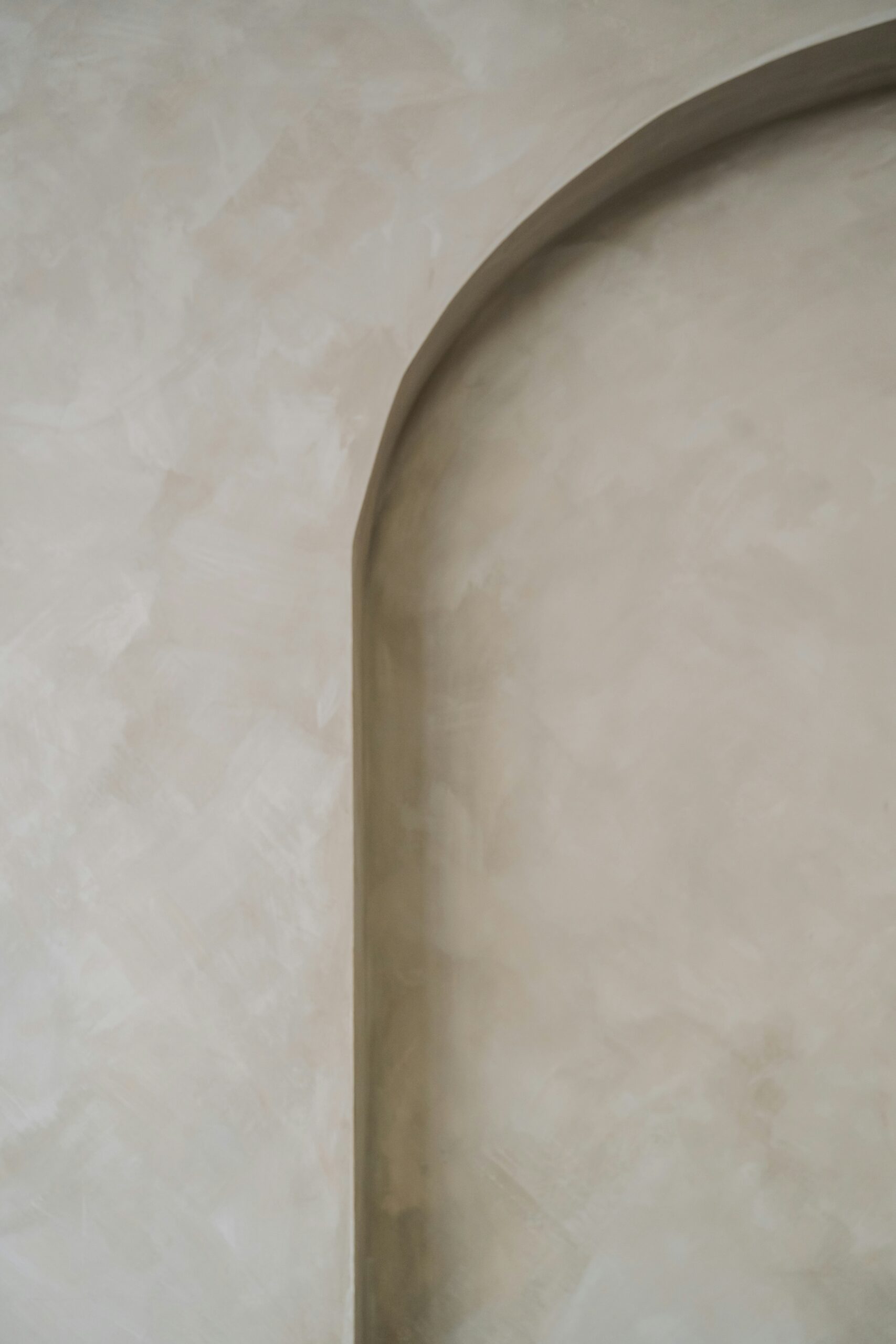
Flat paint gives you color. Lime plaster gives you a surface that actually moves — with light, with time, with the hand that applied it. Here's a look at how it adds character to a room.
Most walls are meant to disappear into the background. Lime walls do the opposite — they hold your attention without saying a word. It comes down to texture. Where paint sits flat and uniform, lime plaster is troweled on by hand, layer by layer, so no two square feet look quite the same. Small ridges, soft dips, faint variations in tone — these are the details that give a room a sense of depth rather than a sense of "finished."
Three Ways Lime Builds Character
Movement
Subtle trowel marks catch and scatter light differently throughout the day, so the wall never looks static.
Tone
Layered application creates gentle shifts in color and shade, giving a wall visual depth instead of one flat hue.
Patina
Lime tends to age gracefully, developing a soft, lived-in richness that most synthetic finishes simply can't replicate.
There's also something honest about a handmade finish. In a world of mass-produced surfaces, a lime wall carries the faint signature of the person who applied it - a slight variation here, a soft cloud of tone there. It reads less like a backdrop and more like a piece of the room's story, which is exactly why designers keep returning to it for spaces that want to feel considered rather than default.
A lime finish doesn't just cover a wall - it gives the wall something to say.
Lime Lath & CO
Whether it's one accent wall in a living room or a full room treatment, the effect tends to be the same: light behaves differently, shadows sit softer, and the space feels a little warmer and a little more grounded. It's a small shift in material with an outsized effect on how a room actually feels to be in.